
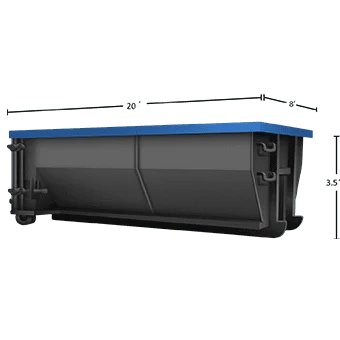
Describe the streams before choosing the container
Explain the work and the materials it will generate. Identify ordinary contents, heavier debris and any item whose acceptance is uncertain. A temporary dumpster contains the load agreed with its provider; it is not a general answer for every substance found during a clearout. Ask about the offered size and loading conditions using that material description, not empty volume alone.
Keep unresolved products or special-waste questions visible. Pennsylvania DEP distinguishes household hazardous-material enquiries and different collection arrangements, and warns against mixing leftover household products. Seek the appropriate material-specific answer rather than treating an unknown item as ordinary debris. Residential-program eligibility should not be transferred to a business load by assumption.
Compare a confirmed mixed load with distinct accepted arrangements
Ask whether the actual listed materials can go together in the proposed container. Acceptance of one material does not establish acceptance of every combination, and a general category name may not describe what the project will really load. Have the provider identify relevant loading or weight conditions for the offer.
If the streams cannot share that arrangement, ask how each can be handled through separately confirmed provision. That might involve distinct accepted container requests or another appropriate program for a particular material. Do not assume extra containers are available, that a public program accepts the user, or that separating material automatically lowers cost or guarantees recycling.
Make the agreed separation clear to the people loading
Tell the actual loading team which materials belong in which accepted arrangement. Use the distinct loading instructions and positions agreed with the provider and property, rather than relying on everyone remembering a verbal discussion with the organiser. Do not use spare space in one container as permission to add a stream allocated elsewhere.
When the team finds a different material, pause that addition and ask for an acceptance answer before mixing it into the load. Keep the responsible contact able to explain what changed. Loading work and any special handling remain separate tasks to agree; container transport does not automatically provide a crew to sort or carry items from the building.
Quote and recover each arrangement as it was accepted
For every proposed container, discuss suitable ground, permitted placement, loading access, door space where relevant and the vehicle approach for delivery and recovery. More than one position may affect the usable property layout. Do not move containers independently or assume a street or neighbouring space can be used to make separation convenient.
The quotation should identify each accepted load, equipment, rental period, loading and weight conditions, transport and collection. Ask how a changed stream or timetable would be reviewed rather than substituting contents without notice. If the workers also need toilets or washing, describe that separate equipment and care requirement; it does not belong in the debris-disposal scope.
Questions before you book
Can materials from one property automatically share a dumpster?
No. Describe the actual combination and obtain the provider’s acceptance for that mixed load.
Does keeping materials separate guarantee a lower price or recycling?
No. Compare the actual accepted offers and their handling conditions; neither result follows from separation alone.
What if we find a different material during loading?
Keep it out of the assumed load and ask the appropriate provider or program for an acceptance answer before adding it.
Can we use spare space in another container for the extra stream?
Only if the provider agrees that change in contents and relevant loading conditions. Empty space is not material acceptance.