
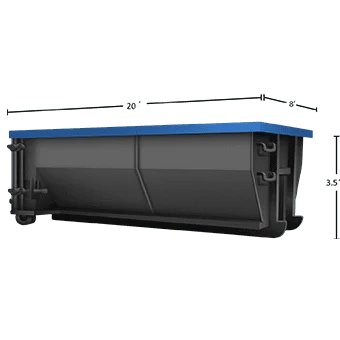
Describe the material and the loading proposal together
A roll-off is a container delivered and recovered through the provider’s handling arrangement. It holds the accepted load during the rental period. Ask about the offered size and the actual contents rather than choosing only by a rough volume estimate.
Tell the provider whether material would be carried, placed through an offered loading door or handled using equipment. Identify bulky pieces, dense debris and uncertain streams. Do not infer a permissible drop height, tonnage or machinery method from the container’s appearance or from equipment already working on the site.
Obtain the provider’s answer before organising work around that method
Ask whether the proposed loading approach is appropriate for the offered container and accepted material. If it is not supported, discuss another agreed arrangement before the cleanup depends on it. This guide does not provide machinery operating instructions or authorise a loading technique.
Have the provider state the relevant loading, weight and contents conditions for the proposal. Empty space does not permit an unaccepted material or loading method. If the material changes as work progresses, report the new requirement instead of treating the first acceptance as covering every later item.
Keep the working area suitable for loading and eventual recovery
Have the property and provider assess stable permitted placement, any loading-door area, vehicle approach and handling space. Include gates, overhead constraints and nearby activity. A position convenient for putting debris in can still fail the provider’s recovery requirements once parked vehicles or stored material surround it.
Keep necessary site circulation and the agreed provider route clear. Do not shift the container yourself as the loading task moves. A public or shared area needs its relevant permission considered; it cannot be assumed available to make room for machinery, a door or a different approach.
Tie the quotation and collection to the accepted loading plan
Request the container, material and loading conditions, rental period, transport and collection in the written scope. Identify who loads it and who can answer a question about contents or site access. Carrying, sorting and other labour are separate tasks unless expressly offered and accepted.
Before requesting recovery, keep the agreed load conditions and access in view and ask the provider how collection is arranged. Do not assume an exchange, an extension or another handling method is included. If workers also need toilets and washing, describe that separate service requirement rather than combining it with debris handling.
Questions before you book
Does equipment that generates debris establish how we may load the container?
No. Describe the intended loading approach and obtain the provider’s acceptance for the actual container and material.
Can we infer a safe drop height or load weight from its size?
No. Ask for the actual loading and weight conditions; this guide does not prescribe machinery operation or limits.
What if the container fits but the door or recovery area is blocked?
The whole working position needs review. Keep the agreed door, handling and collection access usable, not only the container footprint.
Can the container be moved as our work progresses?
Do not move rental equipment independently. Ask the provider to assess and agree any requested change.