
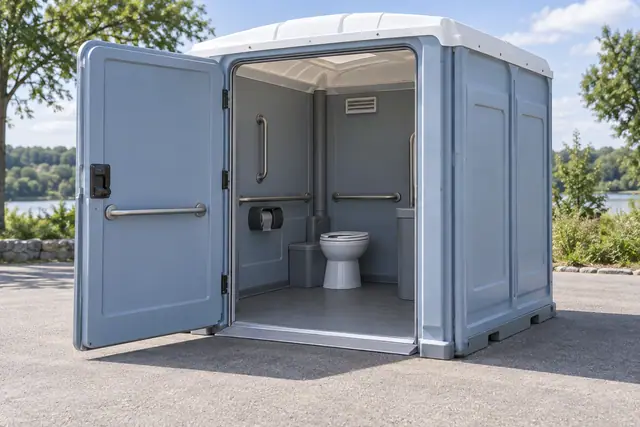
Describe the use that the equipment must support
Ask for the actual offered model’s entrance and interior information, including the features relevant to the intended users. A broad product category or a wheelchair symbol in a picture does not certify the complete installation. Explain practical access requirements without collecting unnecessary medical details from guests.
Compare the proposed accessible-format unit with the rest of the toilet arrangement. Its purpose is a usable facility for the people who need it, not simply an extra cabin counted on an order. Washing must also be considered: an appropriate toilet does not settle whether the person can reach and operate a separate washing point.
Notice when a plan relies on assistance to overcome the site
Walk through the proposed journey with the property representative. Identify changes in surface, thresholds, tight turns, doors and space that other activities will occupy. “Someone will help” does not explain whether the path and equipment are suitable for the actual users. Discuss a better permitted route, position or equipment option when the arrangement depends on an unresolved obstacle.
Do not improvise ramps, lift users, alter the equipment or remove a barrier without the appropriate review and permission. Tell the supplier what cannot be used as proposed and ask how the arrangement should change. A position that looks convenient on an empty plan can behave differently when parked vehicles, furniture and waiting guests are present.
Keep the whole arrangement usable during occupation
Mark the agreed facility and approach in the organiser’s working instructions. Check that deliveries, storage and queues do not consume the space needed by users. The provider’s vehicle and servicing access is another requirement; a pedestrian route alone does not establish how the equipment can be delivered or maintained.
Specify how supplies and conditions are checked, who reports a problem and what provider care is agreed. For washing, include clean water, soap, drying supplies and contained used-water handling. Ask about the full period of use, including setup or clearing teams where relevant, rather than ending provision at the headline event time.
Accept the model and site arrangement together
The quotation should identify the equipment being offered, the requested functions, quantity, period, transport, care and collection. Include any model-specific support that the property must provide. Keep a question about usability open until the relevant parties have addressed it; a label on a quotation is not a substitute for that discussion.
If the position, surface or activity layout changes later, tell the provider and property representative. Review what the change means for users before assuming the previous arrangement still works. Keep the approved route available until collection, and do not relocate rented equipment independently.
Questions before you book
Does a wider cabin automatically make the setup accessible?
No. Confirm the actual equipment and the approach, doorway, interior and washing arrangement needed by the users.
What if the current plan depends on somebody lifting a guest?
Ask for a reviewed alternative arrangement rather than treating lifting or improvised assistance as the solution to an unsuitable route or unit.
Should washing be reviewed separately?
Yes. Include its approach, usable features, supplies and care instead of assuming the toilet selection covers them.
Can the unit be moved if the approach becomes blocked?
Contact the provider and property representative. Do not move rented equipment independently or create an unreviewed route.